
.avif)
Wet rot and dry rot are forms of fungal decay that affect timber within buildings. Both occur when timber remains exposed to moisture for a prolonged period, allowing fungal organisms to break down the wood structure and weaken the timber.
Although the terms are often used together, wet rot and dry rot behave differently. Wet rot is generally more localised and remains close to the source of moisture, while dry rot can spread more extensively through a building if the conditions allow it to develop.
Correct identification is important because the remedial approach, extent of investigation and risk to the wider building fabric can differ significantly.
Wet rot is a general term used to describe a range of fungal decay species that develop in timber with high moisture content. It is commonly associated with leaks, defective gutters, poor ventilation, rising damp, penetrating damp or moisture trapped within the building fabric.
Wet rot usually affects timber that is directly exposed to moisture. This may include:
In many cases, wet rot remains localised to the area where moisture is present. If the moisture source is removed and affected timber is repaired or replaced where required, the risk of further decay can usually be controlled.
Dry rot is most commonly associated with the fungus Serpula lacrymans. Despite the name, dry rot still requires moisture to develop. The term “dry rot” can be misleading because the fungus usually begins in damp timber before spreading into drier areas once established.
Dry rot is considered more serious than many forms of wet rot because it can spread beyond the original moisture source. It can travel through timber and across masonry, plaster and other building materials in search of further timber to colonise.
This ability to spread means dry rot requires careful investigation. Visible damage may only represent part of the affected area, and concealed spread can sometimes occur behind finishes, within floor voids or across adjoining building elements.
Both wet rot and dry rot require moisture. Timber in a dry, well-ventilated environment is far less likely to support fungal decay.
Common moisture sources include:
This is why treating the fungal decay alone is not enough. If the moisture source remains unresolved, the conditions that allowed the decay to develop may continue.
A proper survey should therefore identify both the timber damage and the moisture mechanism behind it.
The main difference between wet rot and dry rot is how they behave within the building.
Wet rot is usually restricted to damp timber and tends to remain close to the moisture source. Dry rot has a greater ability to spread and may affect adjoining areas beyond the initial defect.
Wet rot often causes timber to soften, darken, crack or lose strength. Dry rot may cause brittle, cuboidal cracking, fungal growth, mycelium, fruiting bodies and rust-coloured spores.
However, these signs should always be interpreted by a specialist. Timber decay can be concealed, and visual appearance alone is not always enough to determine the full extent of the issue.
Wet rot may be indicated by:
Wet rot is often found where timber remains persistently damp but the decay has not spread far from the moisture source.
Dry rot may be indicated by:
Dry rot can be particularly concerning where fungal growth appears on masonry, behind finishes or across concealed areas of the building.
Wet rot and dry rot require different levels of investigation and remedial response.
Where wet rot is present, the work may be relatively localised if the decay is limited and the moisture source is straightforward to resolve.
Where dry rot is present, a more detailed investigation may be required to determine the full extent of spread, including concealed areas. Remedial works may involve removing affected timber, addressing moisture sources, improving ventilation and treating surrounding areas where appropriate.
Incorrect diagnosis can lead to either unnecessary works or insufficient treatment. Both outcomes can be costly.
A professional survey should assess:
This assessment should be evidence-based and proportionate to the property, the construction type and the severity of the issue.
The correct remedial approach depends on the diagnosis.
For wet rot, works may include removing the moisture source, improving ventilation, treating or repairing affected timber and replacing decayed sections where necessary.
For dry rot, works may require a more detailed strategy, including removal of infected timber, exposure of affected areas, treatment of surrounding materials where appropriate, moisture control, ventilation improvements and structural timber repairs or replacement.
In both cases, the aim should be to address the cause of the decay, not just the visible damage.
Traditional and period properties can be more vulnerable to timber decay where moisture movement has been altered by previous repairs, blocked ventilation, impermeable materials or changes to the building’s use.
Suspended timber floors, concealed joist ends, roof spaces and wall plates can all be affected where moisture becomes trapped. In these buildings, understanding the original construction and how moisture behaves within the fabric is essential before specifying remedial works.
A heavy-handed or poorly diagnosed approach can sometimes create further problems by failing to address the moisture source or by introducing unsuitable materials.
Northway investigates timber decay by first identifying the type of decay, the moisture conditions present and the extent of affected timber. Our aim is to establish why the decay has developed and whether it is active, historic, localised or more widespread.
Where wet rot or dry rot is confirmed, we provide clear recommendations for remedial works based on the condition of the property. This may include moisture control, ventilation improvements, specialist treatments, timber repairs or replacement of affected structural elements.
Our approach is designed to provide property owners, architects, surveyors and property professionals with clear, evidence-based advice before any remedial work is undertaken.
Wet rot and dry rot are both symptoms of timber being exposed to unsuitable moisture conditions. The visible decay is important, but the underlying cause is often more important.
A professional timber survey helps determine what type of decay is present, how far it has progressed and what needs to be done to protect the property long-term.
A specialist survey can help confirm the cause, severity and likely remedial works before you proceed with a property purchase.
Learn More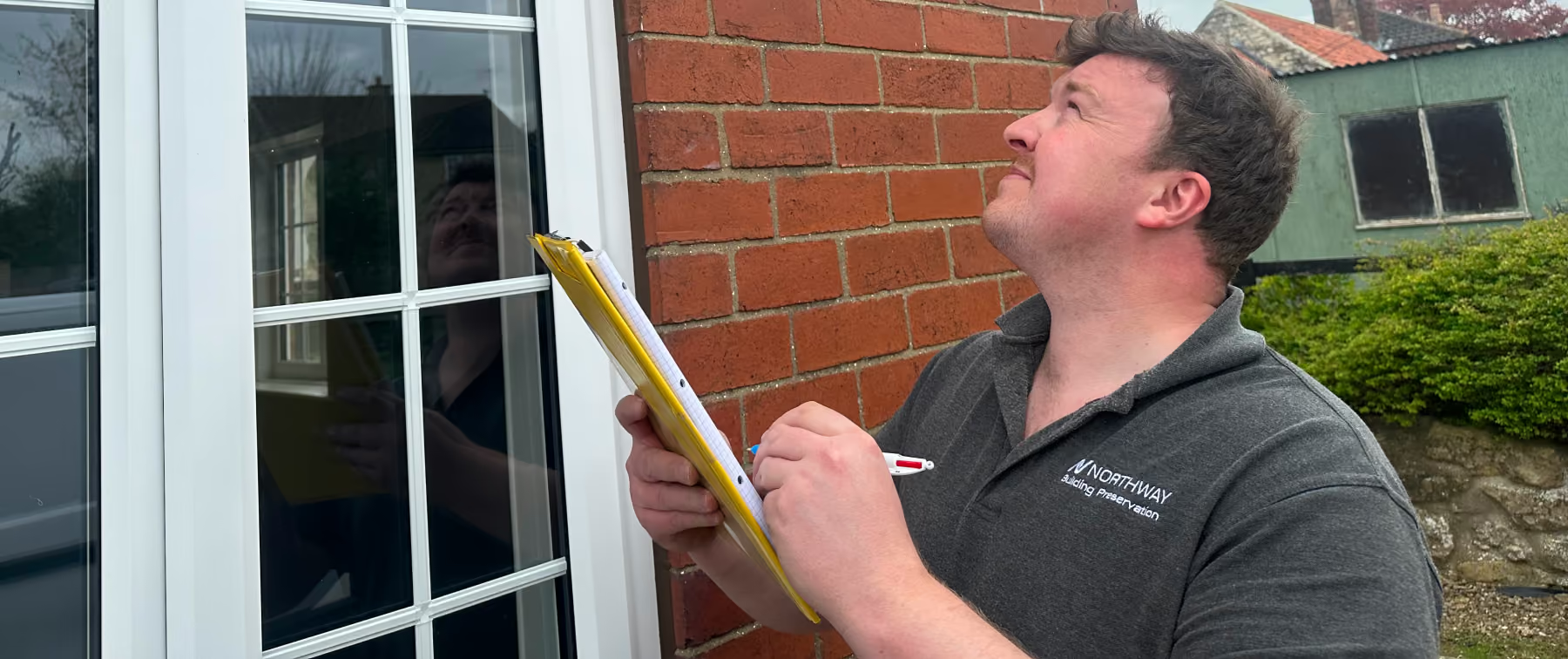
Poor ventilation can trap moisture, leading to condensation, mould, timber decay and increased risk of woodworm activity.
Learn More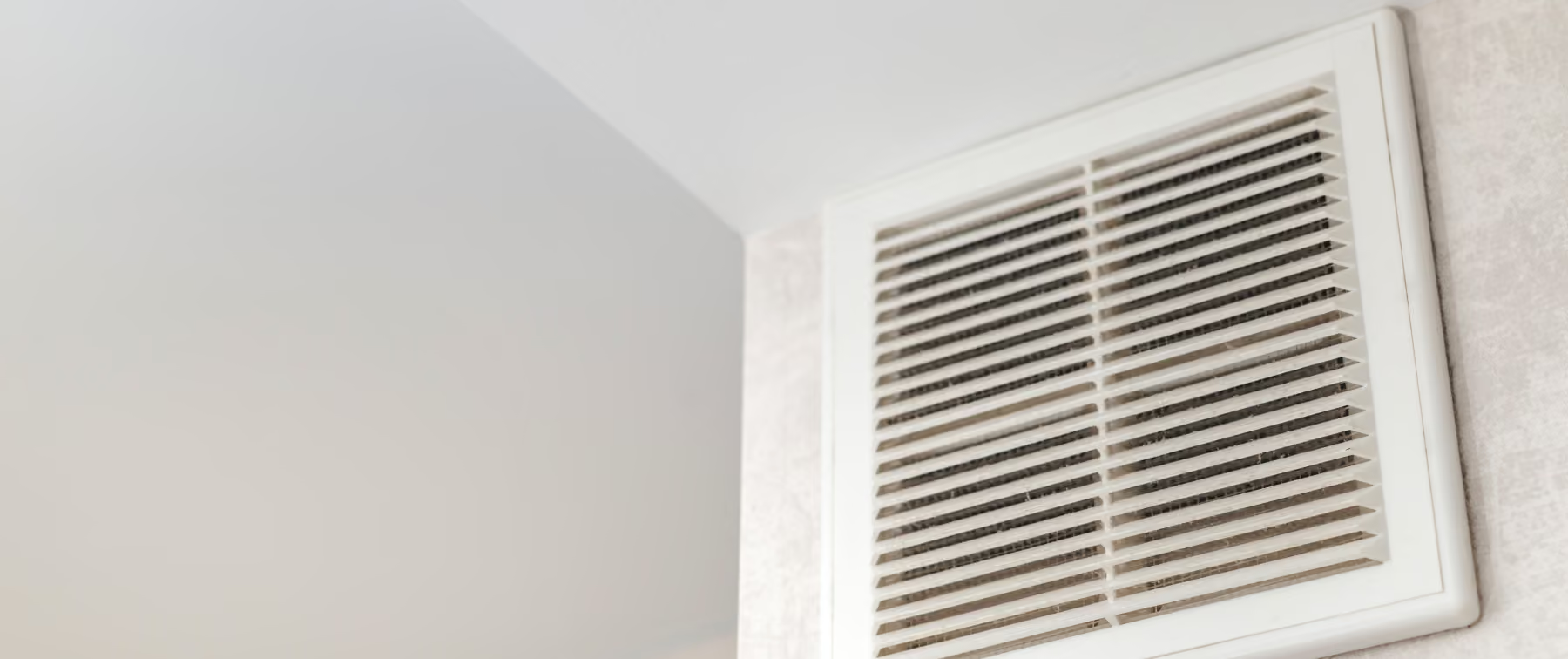
Damp patches after rainfall often point to moisture entering through defects in the external building fabric.
Learn More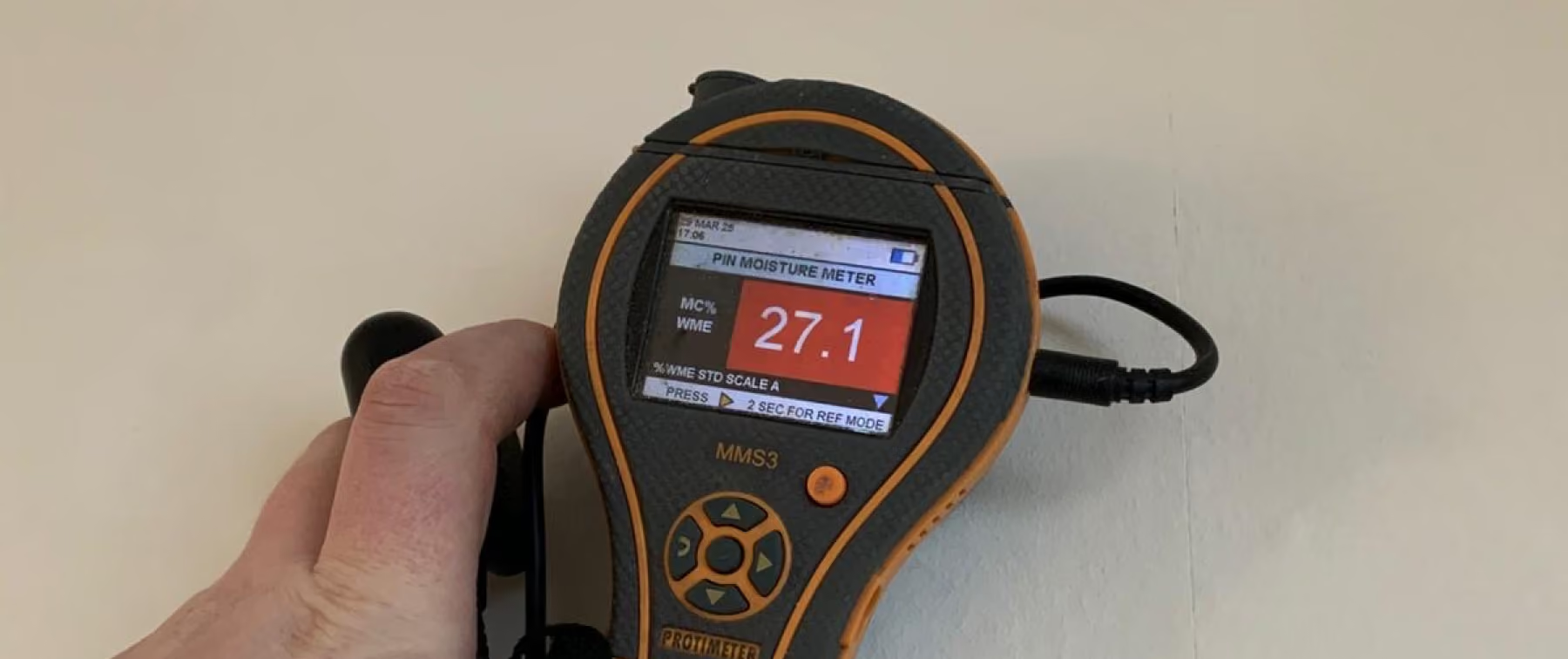
If you have concerns about damp or timber issues in your property, book a survey with Northway.
Whether you have a question, would like to book a survey or need support, our team is here to assist you.


